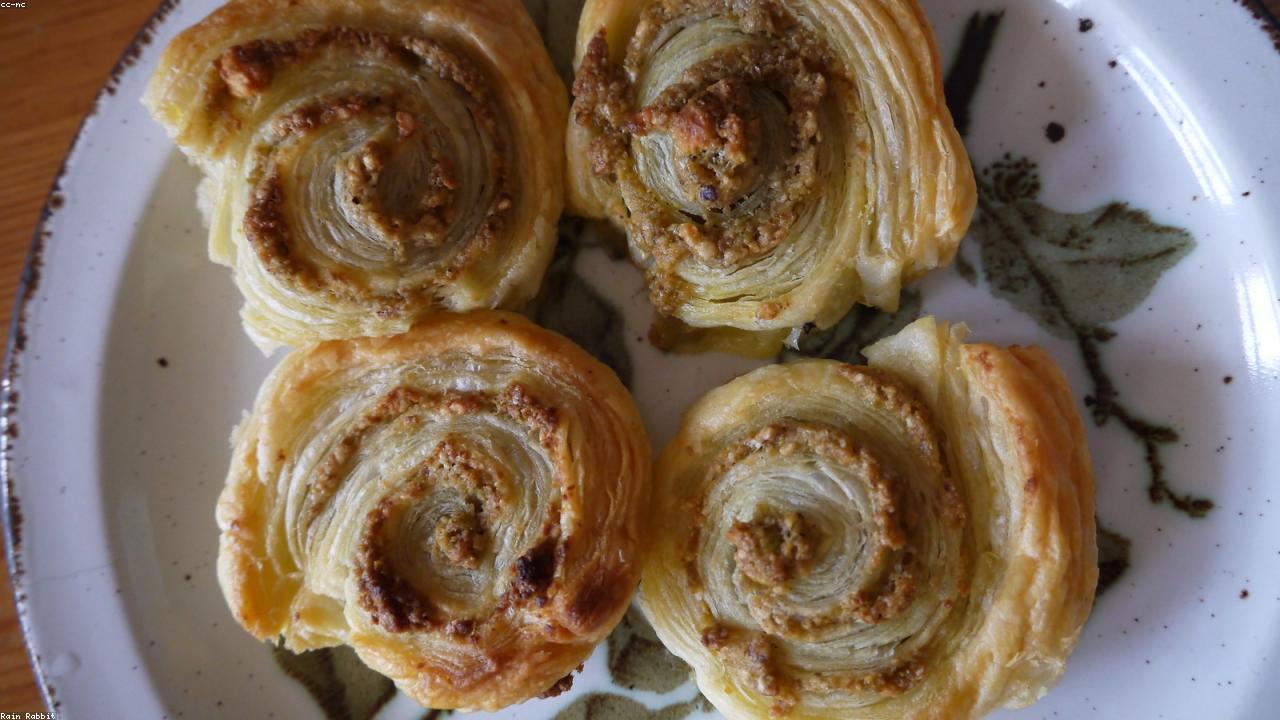
Milhojas — "a thousand sheets" — is the Latin American sweet that takes the crisp, buttery promise of puff pastry and fills it not with French pastry cream but with dulce de leche, the caramelised milk jam known in Peru as manjar blanco. Layers of shatteringly thin baked pastry alternate with bands of glossy caramel, and the whole thing disappears under a thick veil of powdered sugar.
It is a celebration cake — the dessert wheeled out for birthdays, baptisms and Sunday gatherings — and a close relative of a much more famous French pastry. Tracing that family resemblance is the best way to understand it.
What milhojas is
At its simplest, milhojas is stacked puff pastry and caramel. Sheets of dough are baked until crisp, golden and dramatically risen, then cooled and layered with dulce de leche so the soft, sweet filling contrasts with the brittle pastry. The top is finished with powdered sugar, and sometimes the cut edges are coated in crushed pastry scraps or chopped nuts.
It appears in two formats. There is the individual milhoja — a small, rectangular hand-pastry of a few layers — and the grand torta de mil hojas, a tall, round, sliceable cake assembled from many broad sheets, which is the centrepiece form most associated with celebrations.
The puff pastry: lamination is the engine
Everything crisp about milhojas comes from lamination — the same fold-and-roll technique that powers the croissant and the mille-feuille. A slab of butter is folded into dough and rolled out again and again, building hundreds of alternating layers of fat and flour.
In the oven the water trapped in those layers turns to steam and forces them apart, while the butter fries the dough crisp. Crucially, milhojas pastry contains no yeast: unlike a croissant it does not ferment, so it puffs purely on steam and bakes into a dry, brittle, flaky sheet rather than a bready one. That dryness is the point — it is what lets the pastry stay crisp against a moist caramel filling, at least for a while.
Dulce de leche & manjar blanco
If lamination is the body of milhojas, dulce de leche is its heart. Made by slowly cooking sweetened milk until its sugars caramelise into a thick, amber jam, it is one of the defining flavours of South American baking. In Peru the version used is commonly called manjar blanco; in Chile, manjar; across much of the rest of the region, dulce de leche.
The filling is spread generously between every layer. Some bakers keep it pure caramel; others lighten it or pair it with a thin layer of cream, jam or fruit. Whatever the variation, the milk-caramel against crisp pastry is the signature, and it is what distinguishes milhojas from its custard-filled French cousin.
The Latin American cousin of mille-feuille
Milhojas and the French mille-feuille are unmistakably related — both names even mean the same thing ("thousand sheets" / "thousand leaves"), and both are built on layered puff pastry. The lineage runs through Spain, where milhojas is a long-established pastry, and out into the Spanish-speaking Americas with colonisation and migration.
But they are not the same cake. The key differences:
- Filling. Mille-feuille is classically filled with vanilla crème pâtissière; milhojas is filled with dulce de leche or manjar blanco.
- Top. A mille-feuille often wears a smooth, marbled fondant glaze; milhojas is typically just dusted heavily with powdered sugar.
- Form. Mille-feuille is usually a neat individual slice; milhojas is frequently built as a tall, shareable celebration cake.
Regional versions across the Hispanic world
Because it travelled with the Spanish language, milhojas has settled into distinct local identities:
- Peru — typically filled with manjar blanco, sometimes layered with blancmange-style cream, and a fixture of celebration tables.
- Chile — the torta de mil hojas is a beloved national cake, layered with manjar and often dried fruit or nuts.
- Argentina & Uruguay — leaning hard into dulce de leche, sometimes with meringue.
- Spain — the original milhojas, frequently filled with cream or custard and closer in spirit to the French mille-feuille.
Across all of them the brief is the same: crisp sheets, sweet filling, a snowfall of sugar, and a place of honour at the party.
Frequently asked questions
What is the difference between milhojas and mille-feuille?add
Both are layered puff pastry and their names both mean "thousand sheets/leaves." The main difference is the filling: mille-feuille uses vanilla pastry cream and often a fondant glaze, while milhojas is filled with dulce de leche or manjar blanco and simply dusted with powdered sugar. Milhojas is also frequently built as a tall celebration cake.
What is manjar blanco?add
It is the Peruvian name for dulce de leche — sweetened milk cooked slowly until it caramelises into a thick, amber, spreadable jam. It is the classic filling for Peruvian milhojas.
Does milhojas pastry contain yeast?add
No. Milhojas uses puff pastry, which rises purely on the steam released from its butter layers during baking. Without yeast it bakes into a dry, brittle, flaky sheet rather than a soft, bready one — exactly what is needed to contrast with the caramel filling.
Why does milhojas go soft if it sits?add
The moist dulce de leche filling slowly migrates into the crisp pastry, softening it over time. That is why milhojas is best assembled close to serving and eaten fresh, when the contrast between brittle pastry and soft caramel is at its peak.